
Eisha Mhatre
“Wherever humans settle, the face of nature is changed” — Chamisso in Botany for the non-botanists, 1827 (translated by Dr. Herbert Sukopp, pioneer of urban ecology)
When most people think of ecology, they picture natural habitats like tropical forests or alpine meadows. Cities, with their concrete, traffic and towering buildings, rarely come to mind. Yet, in the early 1960s, botanists began asking how human activity shaped the occurrence and distribution of plant species in urban environments.
“The field of urban ecology had one of its defining moments, I would say, in Berlin. Post-World War II, many plant ecologists faced travel restrictions, so they turned their botanical garden studies to the city of Berlin, looking at invasive species and cataloguing the plant species around the city way before such a thing was actually done. Over time in the 1990s, it started to become clear that you could not divest the ecology of a city from the people who lived within it. So the next step involved a shift from ecology of the city to ecology in the city. In some ways, connecting it to the history, the power structures and the policies of the city and the ways they impact on ecology,” explains Dr. Kevin Vega, urban ecologist at Second Nature Ecology + Design.
We heard Dr. Kevin Vega’s lecture at the Future Plants Exhibition by SAE Greenhouse Art-Lab ETH Zurich in 2023 and decided to pick his brain about how urban ecologists are working with city councils to make our neighbourhood climate sustainable.
Thinking of Cities as Ecosystems
Imagine this: what you sow in your backyard or balcony is shaping the biodiversity around you, from pollinators to soil health. As humans, we cannot completely separate our existence within this space. So rather than only looking at the negatives of our impact, urban ecologists look at how we can learn, influence and operate as one of the many interconnected pieces of ecosystems.
Working at the intersection of urban greening (practice of adding plants and open nature to the cities) and urban Soil (human-altered earth found in cities and built environments), Kevin collaborates with city officials to promote biodiversity and educate residents of the ways they use their spaces to thrive healthy urban ecosystems.
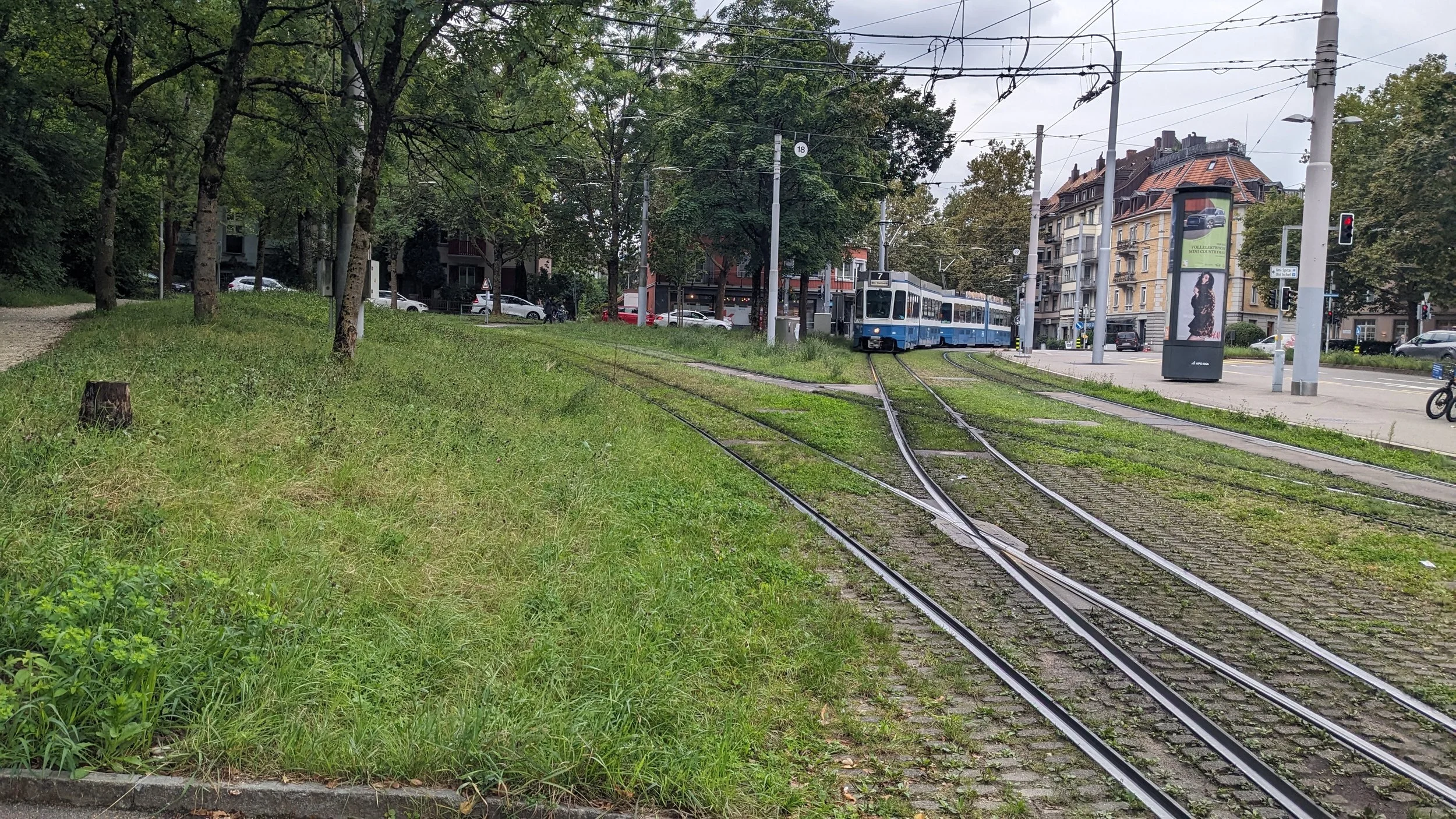
Tramlines at Milchbuck stop near University of Zurich, Irchel
“As one of my PhD projects, I worked with the city of Zurich on their program called ‘Mehr als Grün’ (More than Greenery). The program involved bringing in a few policy changes, such as less mowing, sowing wildflowers, etc. If you were in the city before 2015 and after, you would notice the changes. The flowers that we now see on the sides of roads, in the tram lines, are all from this project. I was to observe and infer how successful Mehr als Grün was, what worked and what didn’t,” says Kevin.
Coming from the Plant Ecological Genetics group at ETH, Kevin started looking at the seed sets used in the program for their genetic diversity, resistance to metals from the city structures and how these connected with the old Zurich eco-diversity. He partnered with a landscape architect and the city's parks and recreation department to assess how much genetic variation existed within the plant populations.
“Some of our concerns were: Are we sowing genetically identical plants? Are our methods benefiting what is already there in our surroundings or are we kind of swamping them with potentially maladapted genotypes? For instance, some of these species have been propagated in-house by some seed companies for years, and they might struggle with isolation and inbreeding problems.”
Today, urban greening is an important part of city planning. Green spaces support mental and physical health and they can help cities adapt to a changing climate. Trees and plants provide shade, while healthy, open soils can help cool urban areas and reduce the effects of rising temperatures.
How should the city decide which trees to plant?
One of the main problems that Zurich and other European cities faced was not consulting plant experts before introducing trees in the neighbourhood. “In the old days, there were two, maybe three, rules of thumb. First, you plant beautiful-looking trees. They’re large, robust, and stand out. Second, you want minimal leaf drop. This sometimes conflicts with the first rule, but the idea is to reduce maintenance. Another part of maintenance is removing seeds and picking up all the little pieces. So instead, you plant male trees,” states Kevin, pointing towards his latest perspective article ‘The Challenges of urban street trees and how to overcome them’.
Male trees may solve one maintenance problem: they don't produce seeds, but they come with another, pollen! Zurich and many other European cities have planted male birch trees, particularly in residential areas, for their appealing appearance and low-maintenance nature. But every spring, these trees release large amounts of pollen, contributing to the seasonal allergy burden.
Additionally, these saplings are mostly grown from cuttings, which makes them genetically identical. Therefore, a sudden infection in one tree can make the entire street denuded of trees. “If there’s no genetic diversity within the species, you’ll get, you know, Elm Street,” reacts Kevin, referring to the popular movie A Nightmare on Elm Street.
Think of the substrate: soil
In 2007, the New York City Parks and Recreation Department launched an ambitious initiative to plant one million trees across the city's urban spaces. The city also launched an interactive map where you can find a tree, mark your favorites and learn how to care for them. Similar drives were started in other cities, like the Green Berlin initiative. These initiatives missed one important thing: not understanding what’s underneath the surface.
“The very substrate that we need to create a green city is the soil and that is the thing that we largely have very little idea of what's going on,” points out Kevin. “If you look at a map of soil collection, every single heavily urbanized area is a white blank space. It is not like nothing is known about the soil, but no one bothered to report anything other than structural integrity and pollution, just like checking the boxes in the manual. Can we build on it? Will the foundation collapse? And is there pollution that we need to mitigate, scrub clean, or report? That’s all.”
One factor that can improve soil and ecosystem health is prioritizing native species. But what counts as ‘native’? In Zurich, for example, you might look to the surrounding mountain forests for species that naturally belong there. But cities are warmer and often drier than their natural habitats. A tree that thrives in the mountains may struggle on a city street, where temperatures can be several degrees higher and the soil has much less capacity to hold water. This creates a tension between choosing species for their native status and choosing plants that can actually thrive in a changing urban climate.
What if we let the soil choose its native species?
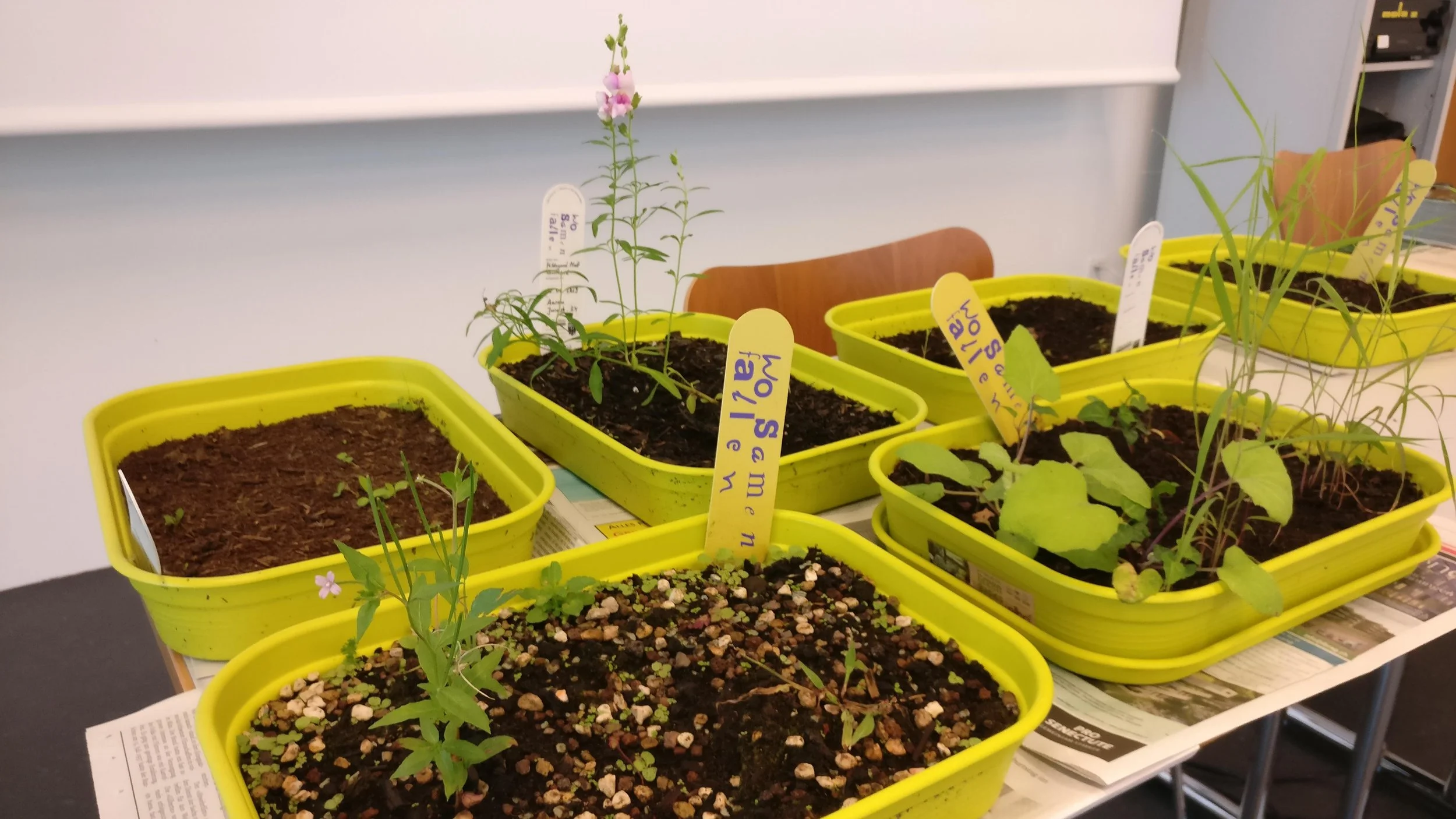
Samenfall project trays. Source: Kevin Vega
Kevin and colleagues started a community outreach project, ‘Samenfall,’ or where seeds fall. They provided locals with garden soil trays and asked them to place them in their gardens or balconies. They had to just water these trays to keep it moist and image them periodically. The idea was to just observe what grows.
“Urban nature isn't static. It is alive, dynamic and you are a part of it. So on your balcony, your garden, or even your rooftop, the plants exist; they move, they can spread on their own. You unknowingly select species that are capable of self-preservation and propagation. The garden in your tray is a more dynamic and connected system with the weather you observe,” explains Kevin
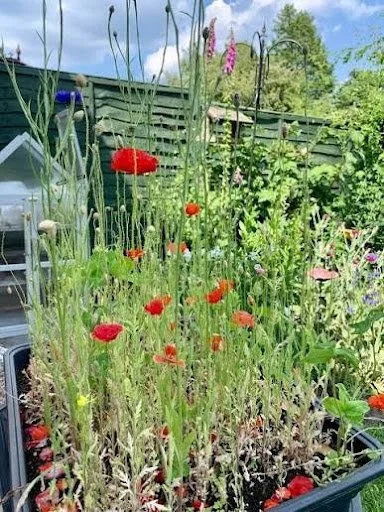
The pollinators and weather around selects for what grows in your garden soil trays, selecting for robust natural urban thriving habitat.
The project was a success, with most of the species growing in the trays being native Swiss plants, including Swiss asters. It also revealed a circular relationship between plants and pollinators: the pollinators helped spread and reproduce the plants, while the growing garden attracted more pollinators in return. Somehow the participating citizens also became informed and actively campaigned for more biodiversity, for removing blacklisted species or learning about ways people use parks and stuff. The next challenge was to understand how soil quality and different soil types could influence which species thrive. That initiated the ‘Mehr Als Umkraut’ or More than weeds campaign to bring attention to the wild plants growing along roads in Zurich city.
How a boy from NYC become an urban ecologist?
Kevin grew up in New York City and went to high school in Manhattan. He loved cities, but never imagined them as places to study ecology. That changed during his Master’s research in Peru, “During my master’s research, I looked at ecotourism disturbance and how ecotourism can affect animals. Weirdly enough, my study ended up focusing on clay caterpillars. I had no training or experience with these kinds of surveys, so I was basically giving it a try. I created clay caterpillars and placed them on fake trees, both on and off trails, and looked at predation. The caterpillars would show marks from birds, insects, and sometimes even mammals, and I wanted to see how predation varied between more pristine and more heavily impacted areas, as well as between areas on and off the trail”, says Kevin. This project brought him to Zurich to work with David Frey on a similar caterpillar project but in an urban setting.

Dr. Kevin Vega
What drew Kevin further into urban ecology was the realization that cities are where most people encounter nature every day. Large parks such as Central Park, the English Garden in Munich, or Hyde Park are important spaces for recreation and connecting with nature. But for most city dwellers, everyday encounters happen much closer to home in the trees along a commute, a small patch of green on the way to a bar, or a garden outside an apartment.
“These are the things that impact your daily life in the city,” Kevin says. “We shouldn’t treat them as second-class green spaces.” If cities depend on trees and plants to make urban life healthier and more livable, he argues, we also need to understand these spaces and design them to support both people and the ecosystems they share.